


Nutrition for Reducing Cancer Risk
AICR Recommendations for Cancer Prevention Nutrition Recommendations

Be a Healthy Weight
Keep your weight within the healthy range and avoid weight gain in adult life
Eat a Diet Rich in Whole Grains, Vegetables, Fruits and Beans
Make whole grains, vegetables, fruits and pulses (legumes) such as beans and lentils a major part of your usual daily diet
Limit Consumption of "Fast Foods" and Other Processed Foods High in
Sugar, Starches or Sugars
Limiting these foods helps control calorie intake and maintain a healthy weight

Limit Consumption of Red and Processed Meat
Eat no more than moderate amounts of red meat, such as beef, pork, lamb. Eat little, if any, processed meat.
Limit Alcohol Consumption
For cancer prevention, it's best not to drink alcohol
Do Not Use Supplements for Cancer Prevention
Aim to meet nutritional needs through diet alone
Strategies to Achieve a Healthy Weight Eat nutritious foods
An important piece of weight management is your nutrition. Eat more vegetables, fruits, whole grains and beans complemented with protein-rich foods. Eating meals that are composed primarily of whole and minimally processed foods will.
Avoid sugary drinks and alcoholic beverages
Sugary drinks and alcoholic beverages do not offer any nutritional benefits. Instead of reaching for a can of soda or juice, drink water, unsweetened tea or coffee. This swap can help you avoid the concentrated calories in sugar-sweetened beverages. Also, avoiding alcoholic beverages can reduce your cancer risk directly.

Mind your portions and proportions
Be mindful of portions and aim to fill two-thirds of your plate with delicious and nutritious plant
foods. One way to accomplish this goal is by taking smaller servings of food and using smaller plates or bowls. It is best to only eat when you are hungry and stop when you feel full. Try eating slowly in order to give yourself time to savor your food and feel when your body is fully satisfied.
Be physically active
In order to prevent weight gain that raises your risk of cancer, AICR recommends that you be
moderately active for at least two and a half hours a week. Try doing any activity which increases your heart rate and leaves you a little out of breath. The more you move around and get your heart pumping, the greater the anti-cancer benefit will be.
Move more and sit less
In addition to adding intentional physical activity to your routine, make it a habit to move around more. Being inactive and sitting too much — whether it is at a desk or in front of a TV can lead to weight gain. Take breaks to get up every once in a while, even if it’s only for 10 to 15 minutes at a time.
Keep it up
One of the hardest aspects of losing weight is accepting that it takes time. Changing your habits and diet can be challenging. Know that feelings of frustration are normal. Consider moving to a more nutritious eating style slowly, so the transition is not too overwhelming. Before you know it, a plant-based diet and a more active lifestyle will become your new norm.
Limiting Your Consumption of Red and Processed Meat
Eating more than 18 oz. of red meat weekly can increase your cancer risk.
If you eat red meat, limit the consumption to no more than 3 portions a
week or about 12-18 ounces (cooked). Eat little, if any, processed meat.
Reduce your consumption of red and processed meats by:
THINK OF LEAN MEAT AS A SIDE DISH.
Don’t make meat the main focus of the meal. Instead, try making the focus of your next
lunch or dinner entrée a vegetable. For example, try making veggie and quinoa stuffed peppers, chickpea tacos or using lentils instead of ground meat.

GO MEATLESS EVERY NOW AND THEN
Try meat alternatives, or plant-based protein sources such as seitan, tofu, tempeh, lentils, chickpeas or quinoa. These alternatives can easily be used in place of meat for your next meal.
LOAD UP ON THE GOOD STUFF
Eating a variety of plant foods will provide your body with various vitamins, minerals,
protein, healthy fats and other nutrients needed to achieve and maintain good
health. Plant-based foods can provide you with adequate amounts of protein,
carbohydrates and fat plus beneficial compounds such as fiber and phytochemicals which are not found in animal products.
SKIP THE PROCESSED MEATS
For every 50g of processed meat that a person eats daily, their risk of colorectal cancer increases by 16%. For your reference, 50g of processed meat is the equivalent of one hotdog or two slices of ham. Because of this, the AICR recommends little, if any, processed meat consumption.
Sources of Plant-Based Protein Include:
Nuts/Seeds
Chickpeas
Tempeh
Seitan
Quinoa
1
Searing the Beef
Sear beef fillets on high heat for 2 minutes per side to form a golden crust. Let it cool before proceeding to keep the beef tender.
1
Searing the Beef
Sear beef fillets on high heat for 2 minutes per side to form a golden crust. Let it cool before proceeding to keep the beef tender.
1
Searing the Beef
Sear beef fillets on high heat for 2 minutes per side to form a golden crust. Let it cool before proceeding to keep the beef tender.
1
Searing the Beef
Sear beef fillets on high heat for 2 minutes per side to form a golden crust. Let it cool before proceeding to keep the beef tender.
Notes


1
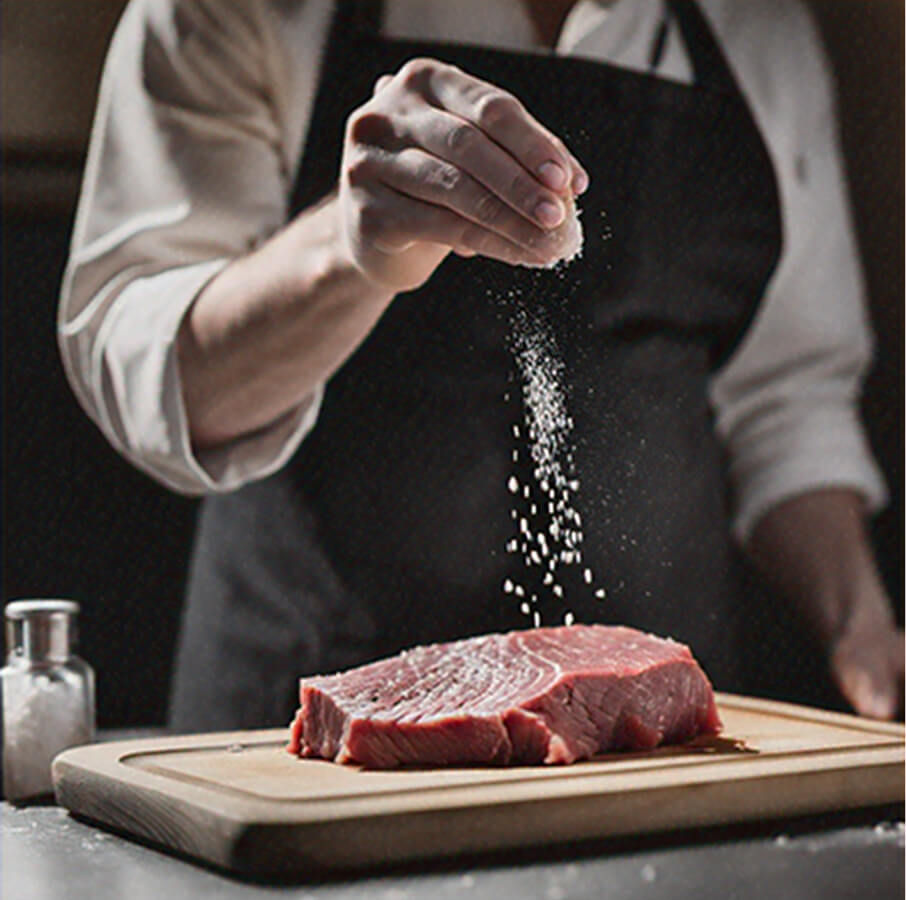
Season the good fresh beef fillets with salt and black pepper. Heat olive oil in a pan over high heat and sear the fillets for 2 minutes per side until it fully browned. Remove the beef from the pan and brush with a thin layer of mustard. Let it cool.
1
Season the good fresh beef fillets with salt and black pepper. Heat olive oil in a pan over high heat and sear the fillets for 2 minutes per side until it fully browned. Remove the beef from the pan and brush with a thin layer of mustard. Let it cool.
1
Season the good fresh beef fillets with salt and black pepper. Heat olive oil in a pan over high heat and sear the fillets for 2 minutes per side until it fully browned. Remove the beef from the pan and brush with a thin layer of mustard. Let it cool.
1
Season the good fresh beef fillets with salt and black pepper. Heat olive oil in a pan over high heat and sear the fillets for 2 minutes per side until it fully browned. Remove the beef from the pan and brush with a thin layer of mustard. Let it cool.
Instructions
Quality Fresh 2 beef fillets ( approximately 14 ounces each )
Quality Fresh 2 beef fillets ( approximately 14 ounces each )
Quality Fresh 2 beef fillets ( approximately 14 ounces each )
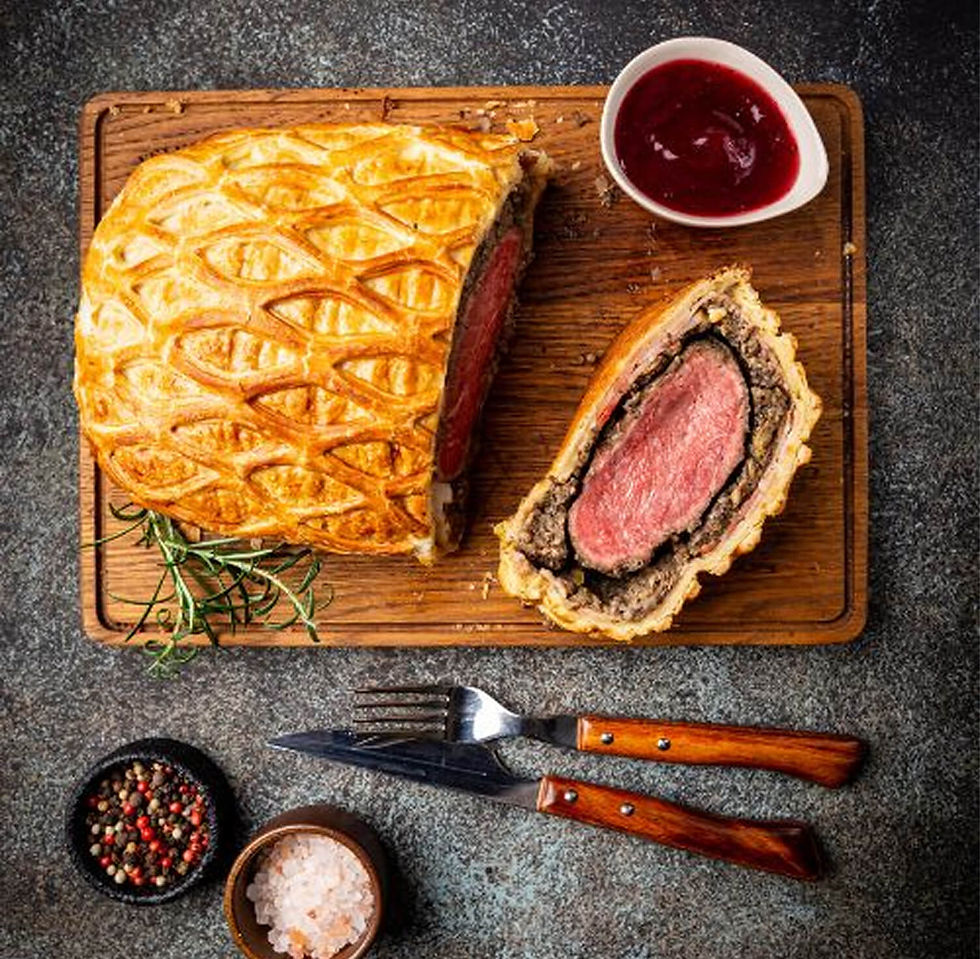
Beef Wellington
Beef Wellington
Fusion Wizard - Rooftop Eatery in Tokyo
Author Name
%20(1).jpg)
Beef Wellington is a luxurious dish featuring tender beef fillet coated with a flavorful mushroom duxelles and wrapped in a golden, flaky puff pastry. Perfect for special occasions, this recipe combines rich flavors and impressive presentation, making it the ultimate centerpiece for any celebration.
Servings :
4 Servings
Calories:
813 calories / Serve
Prep Time
30 mins
Prep Time
30 mins
Prep Time
30 mins
Prep Time
30 mins

Comments